


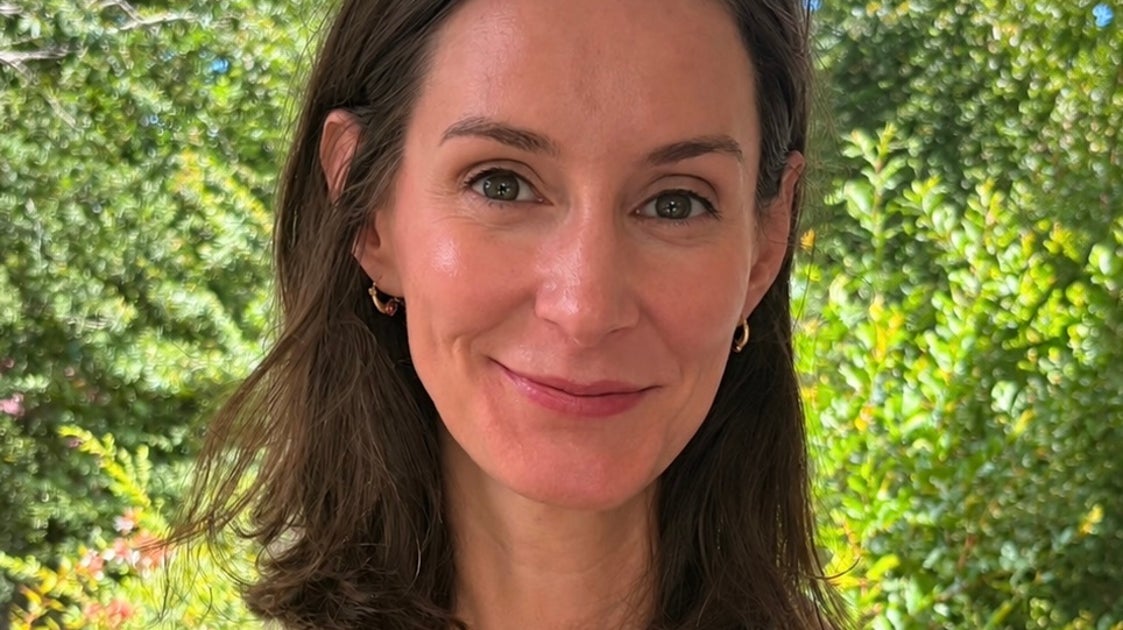

I’m a 44-year-old woman, and the algorithm warns me constantly that my daily life choices are condemning me to an unattractive and rapid decline, in large part because I don’t lift enough weights or eat enough berries.
But as a divorced single mom, I think the internet is missing an important health factor that many women face, which is the cumulative long-term effect of having lived in a bad relationship.
My marriage felt like a chronic disease. For years, I lived in a state of distress and self-doubt, all while trying to create a peaceful home for my children. I slept poorly, struggled to concentrate and fixated on things that ordinarily wouldn’t have bothered me. I neglected other relationships and opportunities, pouring my energy into trying to save a marriage that never deserved saving.
I suspect the years in a bad marriage and the unending aftermath have taken a biological toll, and I wonder whether the consequences will emerge years from now.
I have a doctorate in public health and spent more than a decade working on global HIV at the Centers for Disease Control and Prevention. My work taught me to look beyond individual behavior to the policies, systems and environments that shape our health. Yet it took the collapse of my own marriage to make me consider the potential health consequences of the relationship I’d lived in for years.
Toward the end of my marriage, before we’d called it quits, the pediatrician took me aside after my second baby’s checkup and asked if I was eating enough. The baby was growing, but he said, not unkindly, that my weight loss could affect my breast milk supply. I said I was fine.
After I moved out, I lay awake in my new, peaceful home, a few steps from my sleeping babies, waiting for restorative sleep that didn’t come. The relief wasn’t immediate. And I still live with the consequences every time we negotiate who pays for childcare.
People describe divorce as one of the most painful and difficult experiences they will ever have. But that endpoint glosses over the years that lead up to it and, if you co-parent, the years that follow. There’s a bone-deep exhaustion and quiet erosion of self before the public acknowledgment of “failure,” followed by years of trying to forgive yourself. You sum up the wreckage with a generic “our focus is the kids” while struggling every day to provide those same children with a calm, stable life insulated from the turmoil.
Eventually, I came to see my marriage through the same framework I applied to everything else. A chronic disease, like diabetes, is something you have. A bad marriage is an ongoing exposure to stress, sometimes for years or decades, even after you’ve left it.
That stress can take many forms: persistent conflict, perceived unfairness, financial dependence, coercive control or simply the inability to relax in your own home. Over time, chronic stress can affect sleep, mental health, cardiovascular function and inflammation. When your body rarely has the opportunity to recover, the consequences may extend well beyond the relationship itself.
“A bad marriage is an ongoing exposure to stress, sometimes for years or decades, even after you’ve left it.”
A 2014 meta-analysis of 126 studies involving more than 72,000 people found that the quality of a marriage was associated with physical health, with associations comparable in magnitude to those observed for familiar health behaviors like diet. Another study found that wounds actually healed more slowly after couples argued than after a supportive interaction.
Neither study proves that a bad marriage causes lasting physical damage, but they suggest that the stress of an unhappy relationship may reach far beyond our emotional well-being.
We are routinely counseled on the foundational pillars of health — don’t smoke, limit alcohol, prioritize sleep, exercise regularly, avoid processed foods. There’s an abundance of supplements for those who are really into them, and you can even buy an infrared sauna (which may be FSA/HSA eligible). Yet a person’s closest relationship is treated as a private domestic matter irrelevant to clinical charts.
We need to reframe the quality of our closest relationships not as a private luxury like the sauna, but as a serious factor shaping our long-term health and life satisfaction.
In public health terms, an unhappy marriage may be a modifiable exposure. But that word “modifiable,” comes with an enormous caveat. The ability to leave is shaped by the same structural forces public health already recognizes as consequential: financial security, housing, safety, access to support, and the legal environment.
For some women, leaving can mean housing insecurity, financial devastation or loss of healthcare access. Leaving isn’t always a realistic option, and even when it is, the stress doesn’t necessarily end with the marriage. Nor does harm require violence; it can come from the quieter, less visible strain of tiptoeing through life.
The midterms gave me some hope on that front. In Georgia, Keisha Lance Bottoms became the first Black woman elected governor in American history. When she was 8, her father went to prison, and her mother worked two jobs and went to cosmetology school at night to hold the family together. Dr. Amy Acton, a physician and former state health director, became the first woman elected governor in Ohio. Acton is the starkest example of how a parent’s relationships become part of their children’s health: Her mother’s husband was charged with raping Acton when she was 12.
In South Carolina, pediatrician Annie Andrews, a divorced mother who co-parents her three children, became the first woman the state has ever elected to the U.S. Senate. In Louisiana, Republican Julia Letlow became the state’s first Republican woman senator. She entered politics after her husband died of COVID days before he was to be sworn into Congress, leaving her to raise two toddlers on her own.
These women know, from their lives and their work, that what happens inside a home is shaped by what happens outside it: whether a mother can afford childcare, whether she has health insurance, whether there is somewhere safe she can go. Bottoms has said her win is for the caregiver who needs Georgia to finally expand Medicaid. Andrews ran on affordable childcare. In New Hampshire, Republican Gov. Kelly Ayotte won reelection after creating a state committee that reviews domestic violence deaths the way public health officials review any preventable death: to find where intervention could have changed the outcome.
These aren’t side issues next to health policy. They decide whether “modifiable” means anything at all. Now the work is holding everyone we elect to it.
Policy is only part of it. We need further research that tests this as a chronic-exposure model. But while the studies catch up, we can start with prevention. Learning to choose and navigate healthy relationships should be treated as an essential life skill, not something we’re left to figure out on our own. Too often, girls are taught to hope they’ll be chosen, not to ask whether the person choosing them is good for them.
I’m trying to teach my daughters that skill early.
I feed them (relatively) healthy meals. I encourage active play, enforce bedtimes, follow vaccination schedules and make sure they floss every night. But I also ask about their friendships. We talk about how people make them feel and wonder aloud whether those feelings are telling them something important.
I want them to recognize the difference between relationships that nourish them and those that wear them down, long before they’re old enough to choose a life partner.
I still worry about what years of chronic stress may have done to my own health. No amount of berries will undo that. But I can teach my daughters something I wish I’d learned earlier: to be less accommodating and more discerning about the people they allow into their lives, and to recognize when a relationship is costing them more than it gives.
Emily Stong, DrPH, has spent 15 years in public health and is a WomenLift Health Global Fellow. She founded Remember We Met, a friend-referral dating platform for singles who, like her, are open but not searching. She lives in Atlanta with her two daughters.
Need help? In the U.S., call 1-800-799-SAFE (7233) for the National Domestic Violence Hotline.
If you or someone you know needs help, call or text 988 or chat 988lifeline.org for mental health support. Additionally, you can find local mental health and crisis resources at dontcallthepolice.com. Outside of the U.S., please visit the International Association for Suicide Prevention.