


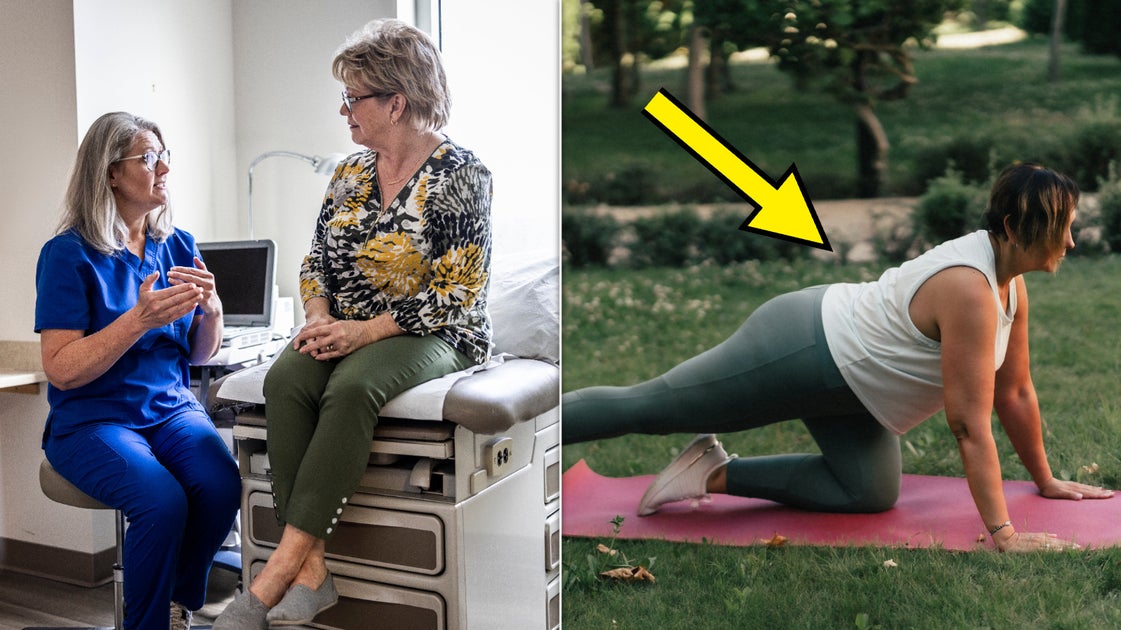
Many of us look for the obvious signs of aging. Gray hair. New lines around the eyes. Doing things a little slower than we used to.
But the mobility experts who work with older adults look at one particular part of the body: Your backside.
Physical rehabilitation specialists watch your glutes and whether they can still get you to your feet steadily. More than one in four Americans over 65 falls each year, and fewer than half report it to their doctor. For many people, a fall is the first sign that strength, balance or mobility have changed.
“The legs are the engine of independence,” said Scott McAfee, an orthopedic physical therapist. They drive you up out of a chair, help stabilize you when your weight shifts, and help you stay upright as you move.
A 2014 study in BMC Geriatrics compared 58 adults over 65 who had fallen in the past year with those who hadn’t. Muscle changes were evident throughout the lower body, but the glutes were the worst affected. Among the fallers, the gluteus maximus fat was twice that of the people who hadn’t fallen. The researchers said changes like that may contribute to poorer balance and a greater risk of falls.
To see whether that muscle can still do its job, McAfee uses the 30-second chair stand. With your arms crossed, stand all the way up and sit back down as many times as you can in half a minute. McAfee watches how clients stand and sit.
The number he counts matters as much as how you do it. “So a fit 62-year-old woman knocking out 18 is in great shape,” McAfee said. “The same woman managing only 9 or 10 is telling me her fall risk may be climbing.”
McAfee added, “If a person has to push off their thighs or the armrests to stand, you stop and score it zero. That’s automatically high-risk.”
The way back down counts too. “A strong mover lowers under control, while a rising fall risk drops the last few inches into the seat because the muscles that decelerate the body are already failing,” he said. “I watch the descent as closely as the ascent.”
Priyank Patel, a chiropractor in Brooklyn who sees older adults for hip, low back and gait problems, is looking at what the trunk and hips do on the way up. “If they pitch their torso forward a lot to get momentum going, that tells me their quads and glutes aren’t generating enough force on their own, so the body is borrowing momentum instead,” Patel said.
Asymmetry counts too. “If one hip hikes up before the other or the knee wobbles inward as they rise, that’s asymmetry I want to dig into,” he said.
Getting you up is only one of the glutes’ jobs. They also help stabilize you when your weight shifts from one leg to the other. Austin Misiura, an orthopedic physical therapist, tests both. He has people get down to the floor and back up without their hands, then balance on one foot.
This floor-rise test catches something the chair stand doesn’t. “For the chair stand there’s almost no mobility requirement,” Misiura said.
“The mobility component of the floor stand is completely missed by pretty much every other standardized test,” he said, “as essentially everyone can be in a standing or sitting position with little to no insight on mobility.”
Misiura said the tests reveal more than watching someone walk. “People walk all types of ways, and change how they walk based on being tested,” he said. The giveaway comes when they can’t cover for it. “Clients won’t even want to get on the floor, or they will need help right away,” Misiura said. On their feet, the same people move slowly and close to the ground, with “a shuffling gait to try and get the foot onto the ground as quickly as possible.”
That same stability matters when someone turns. Dr. Alexander Acosta, a physician and medical consultant with the hospital bed company SonderCare, said that a “turn is a move that causes someone to place load on one leg for a moment, revealing balance and strength.” He added, “A sicker patient will not be able to disguise this.”
Acosta counts the steps it takes to come around. Most healthy adults take three or four, he said. “I begin to pay more attention when someone needs five steps or more, or reaches out for a wall or chair,” Acosta said. He had one patient who needed six steps and a hand on the wall to make a single turn. “The difference between four steps and six isn’t subtle once you know what to look for,” he added.

How to test your glutes at home
The experts say you can try these at home. Keep someone close by and stop if you feel dizzy or unsteady.
1. Stand up from a chair.
Try the 30-second chair stand. On the Centers for Disease Control and Prevention’s scale, a man in his early 60s should manage at least 14 stands, and a woman at least 12, with the number dropping each decade. Pay attention to whether you need your arms to help you up, and whether you control the descent back into the seat.
2. Get down to the floor and back up.
If you can do it safely, get down to the floor and back up without using your hands or furniture.
3. Stand on one foot.
With eyes open, balance on one foot. Aim for 10 seconds on each side. Losing it in the first few seconds is worth noting.
4. Turn a full circle.
Stand by a door frame, turn all the way around and count your steps. Acosta says this should be done in three or four steps. Five or more, or a grab for the wall, is something he pays close attention to.
A low result is a reason to start working on it, because muscle responds to training at any age. “One low score should not be discouraging,” McAfee said. “Maybe just a nudge to see your physical therapist to improve it.”
Gray hair and new lines don’t respond to that kind of nudge. The muscle that gets you up out of a chair, off the floor or around a turn does.
The original version of this story was published on HuffPost at an earlier date.