


Ten years ago, amid a personal crisis, I moved back home with my parents to figure out my next chapter. My sister worked for Hope House Foundation, a nonprofit in Norfolk, Virginia, that supports adults with intellectual and developmental disabilities. Knowing my personality and knack for wanting to help people, she told me I should consider applying for a job there. So I did.
I started part time as a direct support professional (DSP), joining the workforce that provides essential supports for people with intellectual and developmental disabilities to live independently, find meaningful employment, and remain connected with family, friends and their communities.
Within months, I was full time. Today, I’m an engagement coordinator, guiding a team that helps people with disabilities build independence through technology, transportation, and community connection. What began as part-time work turned into my career, and it’s become the most meaningful work I’ve ever done.
On any given day, I may support up to 10 people and work with dozens of other colleagues to make community living a reality. Our work goes far beyond preparing meals or medication. I sit with people and learn what they want to achieve in their lives. Where do they want to go? What hobbies are they passionate about? What barriers are getting in the way of their autonomy and happiness? Then, my team and I work to find solutions.
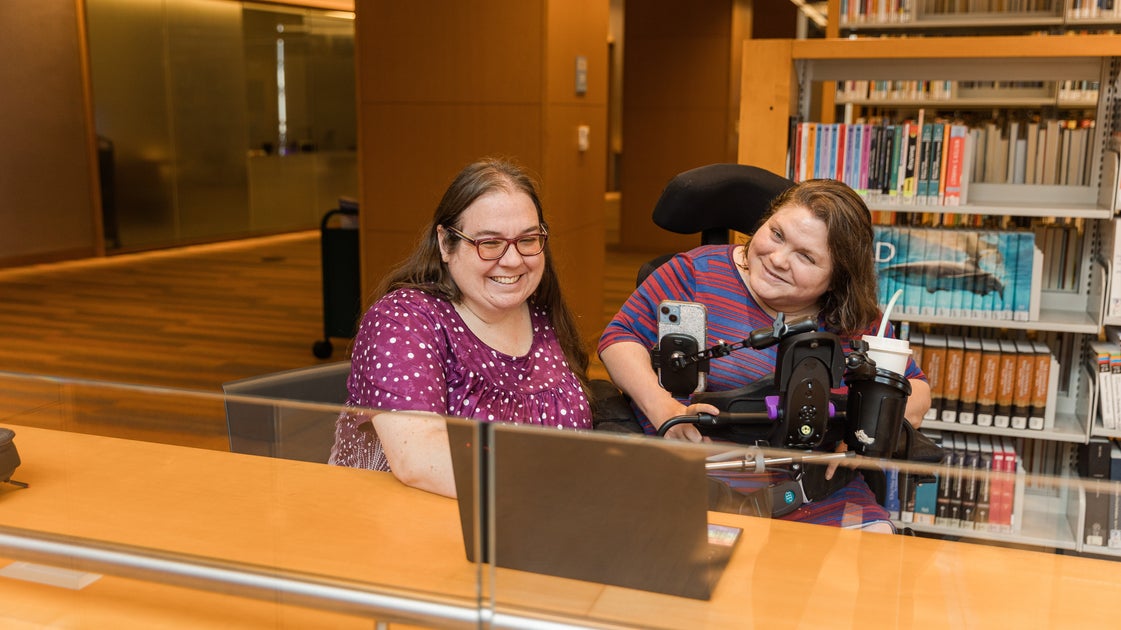
The solutions — especially when it comes to accessibility — are sometimes unexpected and innovative. We use 3D printers to custom-build joysticks and oversized buttons for motorized wheelchairs, tailored to each person’s hands and abilities. We set up smart-home technology so lights, locks and devices can be controlled by voice or phone. We map out homes, room by room, to make sure everyday items are physically accessible. What started as experiments with the resources at our local library has expanded into an in-house operation with three printers and 3D scanning technology.
Transportation is one of the biggest barriers people with disabilities face. It can be expensive, unreliable and inaccessible. So we ride transit routes with the people we support until they feel comfortable riding on their own. We help them download apps, set up rides and learn how to navigate the various systems. One person the team worked with eventually became so confident on the local metro that they turned around and taught someone else how to use it.

I also work with adults with disabilities on developing and maintaining more personal skills, like building healthy relationships and social skills, and establishing hygiene routines. I spent months supporting a woman in her late 50s who had labored through social interactions her entire life. Over time, I watched her grow more comfortable and more confident. The types of support that make these achievements possible often go unnoticed, but they matter enormously in enabling people with disabilities to live, work and participate fully in their communities.
This is just one example of the varied work DSPs carry out every day. And yet, the federal government has no way to track what’s being done.
Right now, the U.S. Department of Labor doesn’t have a Standard Occupational Classification (SOC) for workers like me. That means the government often lumps us in with home health aides or personal care attendants in data used to determine funding — or doesn’t even count us at all.
The SOC system is how federal and state agencies track workforce trends, measure shortages and inform funding decisions. If we’re not seen as a unique entity, policymakers can’t measure the work we do, and without a mechanism for tracking and measuring our work, they certainly can’t fix the workforce crisis we’re in.
In August, the Recognizing the Role of Direct Support Professionals Act, a bill that urges the Office of Management and Budget to establish a SOC for direct support professionals, passed unanimously through the Senate Homeland Security and Governmental Affairs Committee. The bill now awaits a vote by the full Senate, moving us one step closer to creating a distinct classification for the work we do.
This may seem like a minor bureaucratic victory, but it’s so much more than that. Getting our work officially recognized is the first step toward addressing a workforce crisis that has been spiraling for decades.
I’ve watched that crisis play out in real time. When I started this work, I made $11.50 an hour. I’ve watched co-worker after co-worker leave for jobs in retail or fast-food restaurants because the pay was better and the work was less demanding.
They didn’t leave because they stopped caring. They left because the whole system that funds our work is underfunded, which means the people doing it are underpaid. We need compassionate, talented people to stay in this field, and they will only stay if they are paid with the respect our work deserves.
The DSPs who do stay are stretched thin. Turnover rates in our field hover near 40% nationally, and vacancy rates sit between 12% and 15%. According to an annual survey by ANCOR, the leading voice in Washington for providers of long-term support services for people with intellectual and developmental disabilities, 85% of disability service providers experienced moderate or severe staffing shortages in the past year.
Fifty-five percent of providers turned away new referrals to support people with disabilities because they didn’t have enough staff. When providers are forced to turn people away, those people may never access the services that enable them to live in their homes and communities. They lose opportunities for growth, connection and independence.
Unlike the private sector, disability service providers can’t simply raise wages. The funding comes from state Medicaid programs, and Medicaid reimbursement rates set the ceiling. With providers stuck, workers leave the field and the people and families who depend on these services pay the price. Being recognized as a distinct unit would give federal and state agencies the data they need to develop accurate payment rates and advocate for real investment in our workforce.
I do this work because I love it. I love figuring out solutions to everyday challenges in partnership with the people I support. I love proving to them, and to anyone who doubts them, that absolutely anything is possible with the right support.
But love doesn’t pay the bills. And the people I support deserve more than a workforce held together by passion alone. They deserve to be supported by professionals who are recognized, fairly compensated, and able to stay in the job long term.
Change like this happens when people who care decide to act. Call your representatives and ask them to support the Recognizing the Role of Direct Support Professionals Act. Tell your state legislators that workers like me deserve living wages. Share this story with someone who doesn’t know our work exists. The more people who speak up, the harder it will be for our workforce to be ignored.