


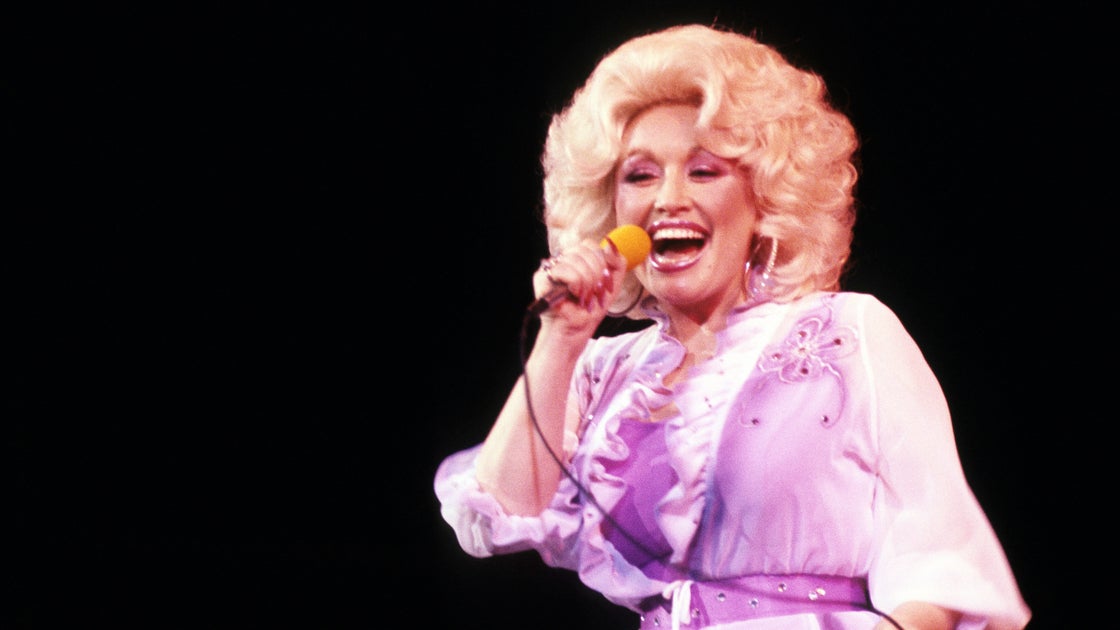
My daughter knocked on my bedroom door the other night just as I had gotten into bed.
“Mom, Dolly died,” she whispered.
She wasn’t telling me a piece of celebrity news. She was telling me that someone she cared about was gone. And, in a way, I understood.
Lindsey is an adult on the autism spectrum who will celebrate her 32nd birthday in a couple of weeks. She has never met Dolly Parton, never seen her perform in person and never sat in the same room with her. But through the strange intimacy of social media, Lindsey came to feel that she knew Dolly. She watched her interviews, listened to her talk, and followed the things she said about life, people and herself. She felt a connection.
That got me thinking about Lindsey’s grandfather — my father — who lived to almost 95. He and Lindsey had a special relationship, and much of it revolved around theater. They saw so many Broadway and Off-Broadway shows together, I couldn’t begin to count them. That was their thing. Lindsey is a social worker, and she also helped care for her grandfather at the end of his life.
One of their favorite shows was “9 to 5,” which is comprised of music and lyrics by Dolly. My father loved her. He loved her humor, her talent and, I think, her willingness to be completely herself.
My mother used to call Lindsey “Dolly.” Sometimes she called me Dolly, too. It warmed my heart every time.
But here’s the uncomfortable part of this story: I owe Dolly Parton an apology.
When I was younger, I didn’t really see her. I knew she was a country singer. I knew she was famous. I knew she was funny. And I knew about her hair and her body. And, like so many people, I had reduced her to the most obvious thing about her.

My parents joked about Dolly’s breasts. I did, too. It was part of the cultural shorthand around her, and I absorbed it without thinking much about it. What I didn’t appreciate was everything else. The extraordinary songwriter. The businesswoman. The philanthropist. The woman who built an enormous career without allowing anyone to convince her that she had to become somebody else to do it. And especially the woman who seemed determined to make room for people, no matter how different they were from her.
Dolly understood what it was like to be judged by appearances. People looked at her hair, her body, her voice and the persona she created and decided they knew who she was. Rather than apologize for any of it, she turned it into something she could control. That resonates with me because it is something I have always tried to teach Lindsey: Other people’s opinions of you are not the same thing as the truth about you. People will make assumptions. They will see one thing and think they know the whole story. Don’t let them decide who you are. Dolly certainly didn’t. And I think Lindsey understood this before I did.
Lindsey has always been drawn to people who make room for other people. Connection matters enormously to her. She has worked hard to find it, and sometimes, even harder to hold on to it. That’s one reason I have mixed feelings about social media.
We hear, quite rightly, about the damage it can do, particularly to young people. But for someone who sometimes feels different from the people around her, social media can also open a window to a much bigger world. Lindsey has found people online who make her laugh, people whose stories she follows and people with whom she feels a genuine connection even though she has never met them. Dolly became one of those people.
So when Lindsey knocked on my door that night, I couldn’t help thinking that this too was a kind of connection. A woman who my daughter never met had somehow become meaningful to her.
It also made me think about something else Dolly had in common with Lindsey: She knew what it was like to be in a dark place.
Dolly spoke publicly about a period of profound depression she experienced in the early 1980s and the suicidal ideation she felt then. She eventually found her way through it and years later began to talk candidly about what happened.
That caught my attention because Lindsey has been open with me about her own struggles. There have been times when she has been in such a dark place that I have worried deeply about her.
As a mother who has lost a brother to suicide, you learn things you can never unlearn. You understand that a person can be funny, intelligent, talented and loving and still be completely overwhelmed — and that everyone is facing their own battles, most of which aren’t visible to the rest of the world.
September is Suicide Prevention Month, and I wonder why we don’t talk more about how much connection truly matters. Reaching out matters. Asking someone if they are OK matters. And sometimes encouraging someone to keep going makes a difference.
“Never give up,” my father told Lindsey during his final hours at Calvary Hospital in the Bronx. Those words have stayed with her, and they’ve stayed with me.

Last weekend, I happened to be in the West Village at Marie’s Crisis, the tiny, historic, regularly packed gay New York City piano bar where people gather to sing show tunes at the top of their lungs. Someone played “9 to 5” as a tribute to Dolly, and the whole room sang along. I stood there watching the faces around me in awe.
I always marvel at what happens at Marie’s Crisis. Some people come alone. Some come with friends. Some are regulars, and some are tourists who wander in without knowing exactly what they are getting themselves into. It doesn’t seem to matter. Everybody sings. Everybody laughs. Everybody gets a turn. People walk through the door, and for a couple of hours they become part of something bigger than themselves. Something beautiful.
On this night, singing along to one of Dolly’s songs with dozens of strangers, I felt more joy than ever. I couldn’t help but think maybe that’s what Dolly understood better than most of us: People want to feel that they belong. They want to be more than the thing that is easiest to notice about them. They want to be seen. Not as a stereotype. Not as a diagnosis. Not as a mistake. Not as a difficult history. Just as a person.
Perhaps the real lesson isn’t about Dolly at all. It’s about the danger of thinking we know someone before we’ve taken the time to really see them. My father saw more in Dolly than I did. Lindsey saw more in Dolly than I did. And both of them, in their own ways, have reminded me to look again.
So I want to apologize to Dolly for not seeing more of her until now. And I want to thank her for helping to show us that there’s always more to a person than meets the eye. Sometimes it takes a lifetime to learn that. Sometimes it takes your autistic adult daughter knocking on your bedroom door to tell you that Dolly Parton died.
Debra Manetta is a communications professional, storyteller and newly certified life coach whose work is rooted in deep listening and lived experience. A native Chicagoan who transplanted to New York more than three decades ago, she has spent her career telling the stories of students, educators and communities, most recently at a New York City college and previously at a Westchester County school district. Her coaching practice draws on her own experiences with grief, family, caregiving and resilience, helping people navigate complex relationships and reconnect with their own inner wisdom. She writes about emotional endurance, connection and the quiet turning points that shape a life. For more from Debra, find her on LinkedIn.
Do you have a compelling personal story you’d like to see published on HuffPost? Find out what we’re looking for here and send us a pitch at pitch@huffpost.com.