


Officials at the Centers for Disease Control and Prevention reportedly declined to publish an alert to doctors about the risks of measles during pregnancy, according to reporting from The Washington Post.
The disease report was published this week in the New England Journal of Medicine Evidence. However, scientists at the CDC told the Post they hoped to share this data back in September via the CDC’s Health Action Network alert. They said they were denied by CDC officials.
This news comes as measles cases reach a 35-year high in the United States and just as the country officially lost its measles elimination status. The report found that measles in pregnancy was linked with high rates of pneumonia, preterm delivery and congenital measles, which is when a baby is born with a measles infection; 98% of people with measles during pregnancy were unvaccinated or had an unknown vaccine status.
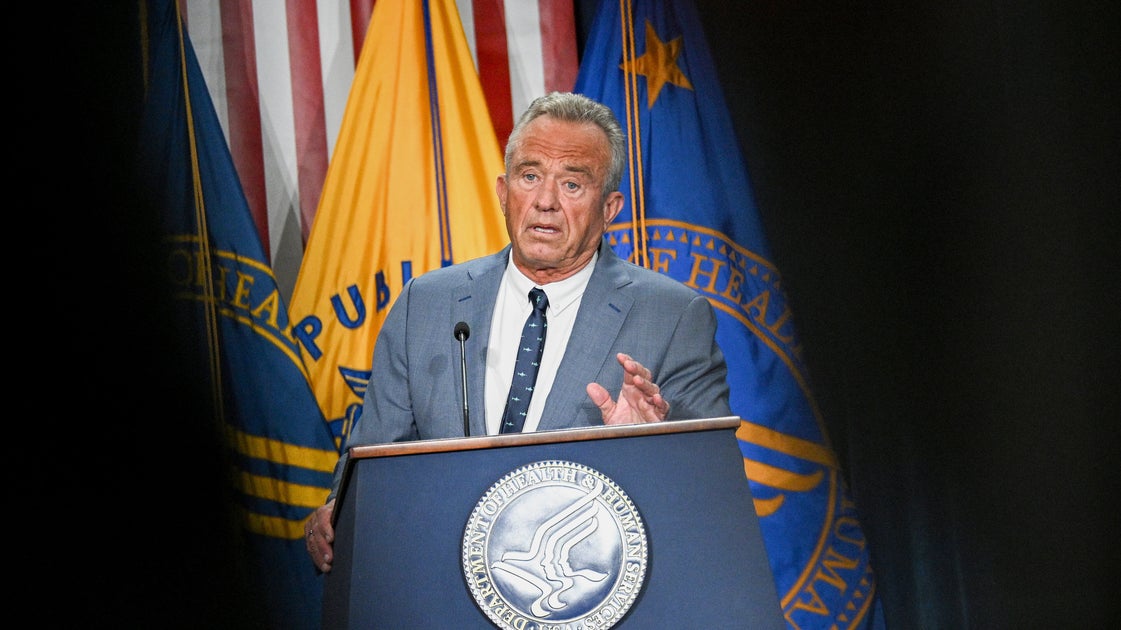
When asked to comment, a spokesperson for the CDC told HuffPost that “under the leadership of Secretary [Robert F.] Kennedy and CDC Director Dr. Erica Schwartz, CDC is taking aggressive action to combat measles outbreaks and ensure clinicians have timely access to critical public health information. CDC researchers selected an external journal for this study early in the publication process to reach clinicians as quickly as possible.”
On the CDC website, Health Action Network alerts are described as “CDC’s primary method of sharing cleared information about urgent public health incidents,” which “provides vital health information.”
HuffPost spoke to science and medical professionals who have thoughts about this decision at the CDC. Here’s what to know:
By not issuing the health alert, physicians were not provided with helpful and time-sensitive treatment information.
“In not issuing this health alert, you missed out on opportunities to educate physicians who are caring for vulnerable people, and that is the pregnant women, and also the babies being born to these women,” said Dr. Anita Patel, a pediatric critical care doctor in Washington, D.C.
These alerts help physicians understand the best treatments available.
“It was a missed opportunity to teach these physicians how to treat women who either are exposed to measles, who’ve contracted measles or who are delivering infants with measles,” Patel added.
Most physicians do not even know how to treat measles because the disease was eradicated in the U.S. until just recently. “These CDC health alerts are absolutely vital to getting that information into the hands of the clinicians,” Patel said.
Measles treatment is time-sensitive, with certain treatments needing to be administered quickly after exposure. You have days to administer immunoglobulins after someone is exposed to measles, not weeks, Patel added.
It is part of a greater pattern of the government trying to make things appear better than they are.
- Dr. Anita Patel
“I‘m not in the minds of the people on the Hill who made these decisions, but what I can say is: It is part of a greater pattern of the government trying to make things appear better than they are,” Patel said. “But that doesn’t work with medicine because people are going to get sick whether they want to talk about it or not,” Patel added.
This incident is an example of a “sick normalization of disease,” experts said.
“I just feel like right now, honestly ... there is a sick normalization of disease that is happening,” said Jessica Malaty Rivera, the executive director of the Infodemiology Initiative at The Public Good Projects.
Health and Human Services Secretary Robert F. Kennedy Jr. and professionals at the CDC all know ― and admit ― that the only way to prevent measles is with the MMR vaccine, Malaty Rivera said.
Yet, “what’s not being spoken, or sometimes being spoken on the side, is that they think it’s OK to just get measles. They think it’s mild. They think it’s fine,” she added. “They’re allowing people to have preventable disease, preventable disability and preventable death because they think the disease is not a big deal.”
People will point back to the 1950s, before the measles, mumps and rubella vaccine, and say that “everyone got measles” and they were “fine.” This simply isn’t true.
In the 1950s, 500 kids died each year from measles, according to Malaty Rivera. “That’s not normal.”
“But when I share that statistic of a pre-MMR America and how it affected children, people would then say, ‘Well, 500 kids isn’t that big of a number.’ This is, again, where we’ve normalized death and disability in such a disgusting way,” she explained. “We are OK with kids dying. We are OK with moms dying, and that is reflective in how we are messaging about ways to prevent horrible complications from a preventable disease.”
People often say “most kids survive measles,” which is a loaded statement.
“I’m like, ‘OK, so, which kids? The privileged kids who have access to healthcare, the privileged kids who have parents who have jobs that allow them to take time off work to be cared for and have the supportive care, the kids who don’t live in communities where they don’t have physical proximity to a medical facility? Which kids?” she added. “It reveals the racism, the eugenics, the white supremacy, honestly, of these types of biases, because ‘most kids’ is not all kids.”

Not disseminating this alert washes over the severity of measles.
Measles is dangerous for both mom and baby, Malaty Rivera said. The report found that 13 babies were born with congenital measles. “We haven’t seen congenital measles in this country in decades, and doctors now are having to treat conditions that they’ve never seen before.”
Congenital measles is associated with a higher risk of a severe type of neurological impairment known as subacute sclerosing panencephalitis, “which is a rare but 100% fatal complication that can happen years after a person recovers from measles infection,” Malaty Rivera said.
This complication can happen six to 10 years after someone recovers from measles, she said. While it can also occur with regular measles infections, it’s more common in cases of congenital measles, Malaty Rivera added.
“That’s what’s concerning is this washing over of the severity of this type of infection, especially among pregnant moms who can die, go into preterm labor, have babies who are born with all kinds of impairments — and all of it’s preventable,” Malaty Rivera said.
The only way to prevent measles is by getting the MMR vaccine. Pregnant people and babies under 6 months can’t get the shot, though, because it’s a live vaccine, Patel noted.
“I have been telling every single one of my friends who is trying to conceive right now, those in that pre-pregnancy time, that if they are in an area that has measles, please check your measles titers,” which measures measles antibodies, Patel said.
If you do not have measles antibodies or were not vaccinated in the past, Patel recommends that you get the MMR vaccine before getting pregnant. By doing this, you’re protecting yourself and your baby, who will benefit from maternal antibodies during the first months of their life.
Timing for both treatment and prevention of measles is crucial, especially in babies and expectant moms. “This is not a disease that you can just lackadaisically treat and monitor. You have a window of treatment, and after that, you lost your window,” Patel said.
Referencing the CDC’s decision not to publish the alert, Patel added, “I really don’t want to call this a missed opportunity. I want to call this an intentional decision.”